

The challenge: coal regions in transition
Global efforts to integrate renewable energies make energy storage one of the most important challenges for current and future energy systems. Around 77.6 % of the final energy consumed in EU households is used for space and water heating, and the integration of renewable energy sources into district heating systems across Europe is becoming increasingly important on the way to a completely carbon-free district heating system by 2050.
At the same time, the phase-out of coal is transforming Europe's mining regions. The closure of mines affects the local economy, social structures and the environment. Innovative strategies are needed to repurpose former coal and lignite mines in line with a climate-neutral and environmentally friendly transition — and to create new, sustainable jobs in these regions.
The idea: pit thermal energy storage (PTES) in post-mining lakes
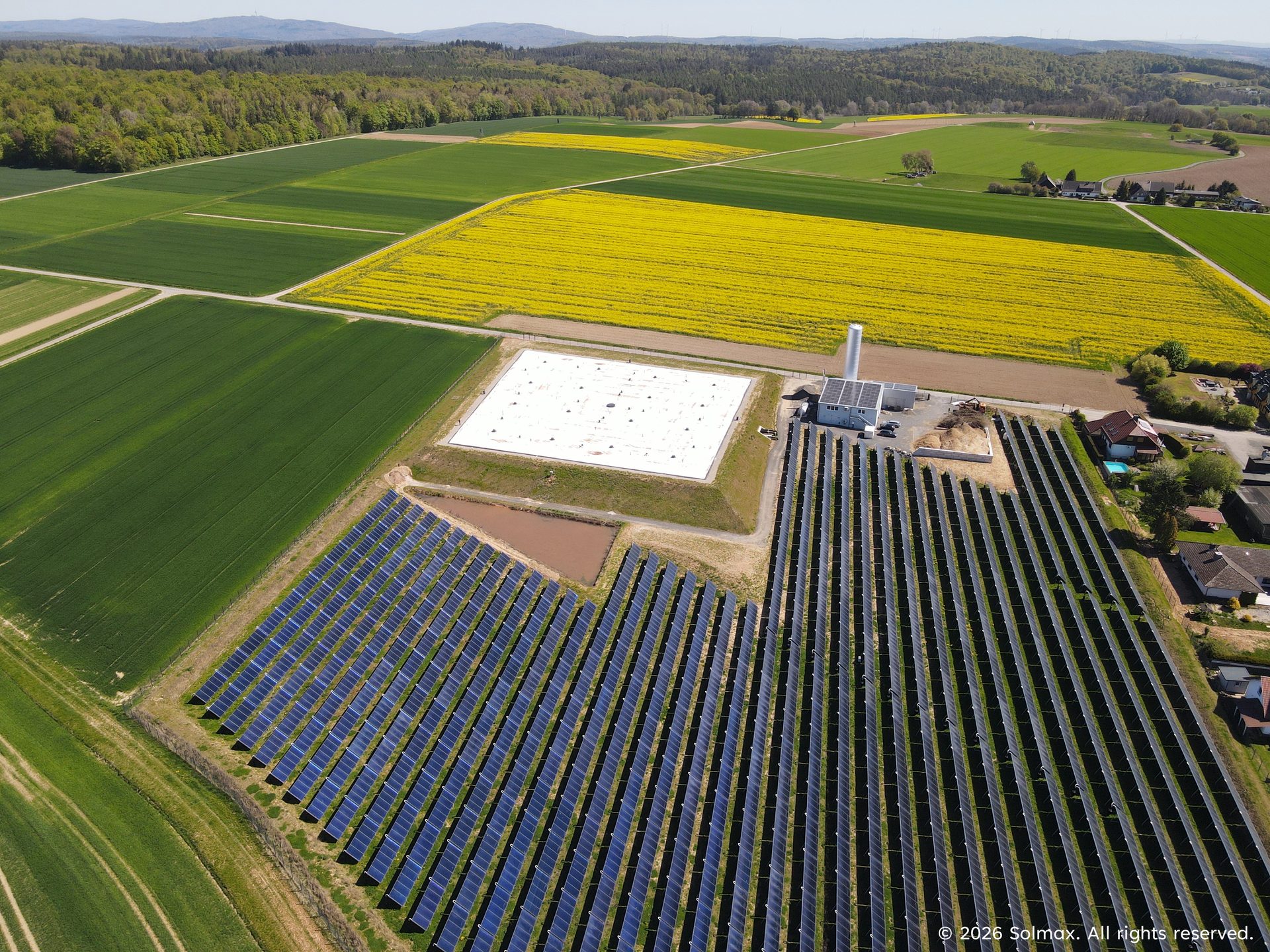
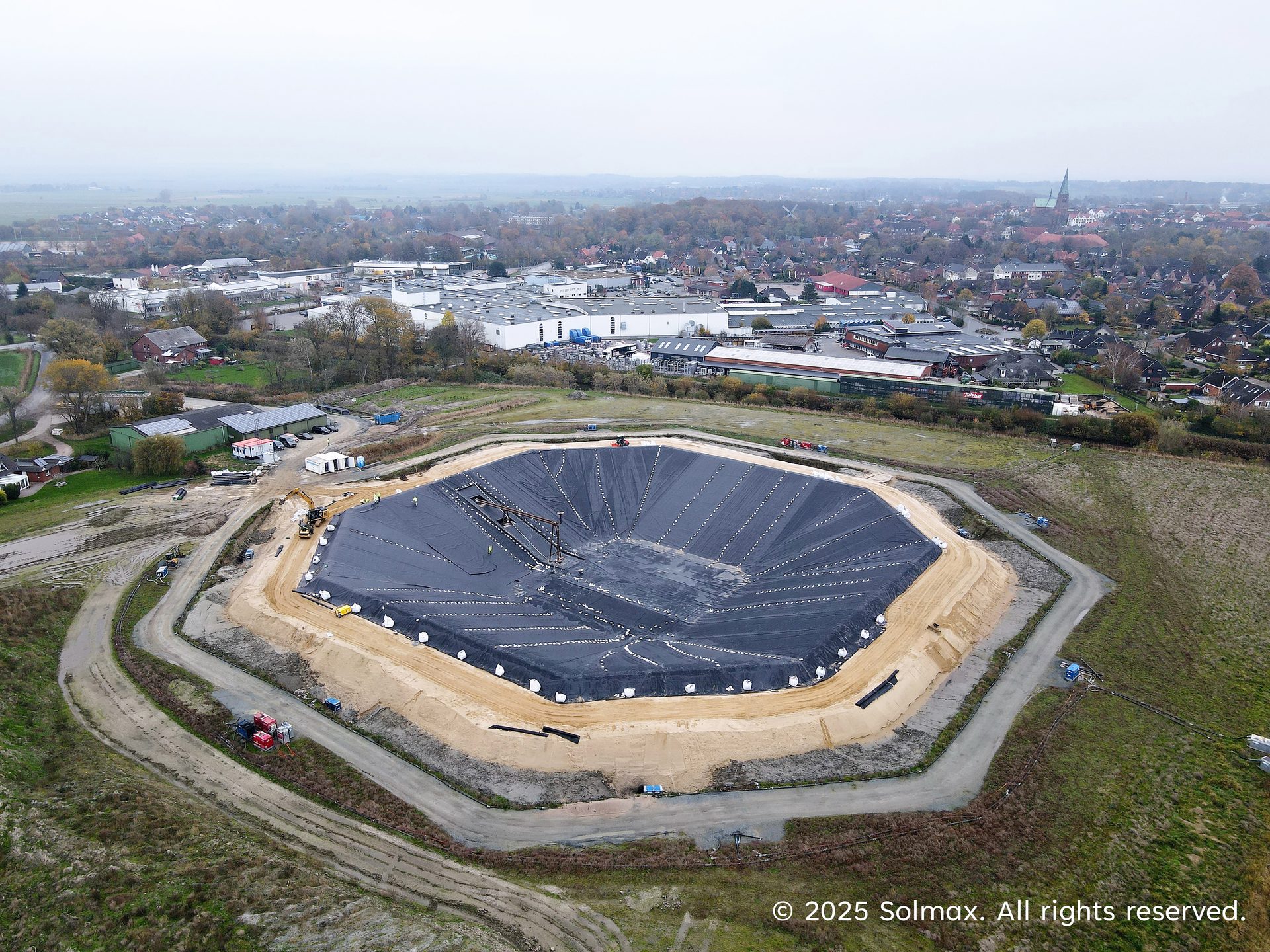
Pit thermal energy storage (PTES) is one of the most promising and affordable options for large-scale thermal energy storage. A PTES consists of an excavation in the ground filled with water, lined with a temperature-resistant polymer liner and covered with a floating insulation lid. Excess heat from solar thermal and biomass plants, industrial waste heat or excess electricity from wind turbines and photovoltaics can be stored at temperatures of up to 90 °C — on a diurnal or seasonal basis — before being re-supplied via heat pumps or fed directly into the district heating grid.
Today's commercial PTES plants (e.g. Marstal, Dronninglund and Høje Taastrup in Denmark, and Meldorf and Bracht in Germany) reach storage efficiencies of up to more than 90 %, with levelised storage costs of about 0.25–0.45 EUR/kWhth. PTES becomes markedly more cost-effective as it increases in size — construction costs per unit of storage volume decrease significantly for larger pits, especially above 60,000 m³.
Former open-pit lignite mines offer exactly this scale: some of the largest pits in Europe, available for sustainable subsequent use as mining ceases. TRIDENT transfers the proven PTES technology to these post-mining lakes, advancing it from technology readiness level (TRL) 3 to at least TRL 5.
Objectives
TRIDENT pursues three SMART objectives with associated key performance indicators:
- Advance the Technological Readiness Level for PTES in post-mining lakes from TRL 3 to TRL 5 — validating the technology in the relevant environment of open-pit mines by the end of the project.
- Validate the cost-efficiency and commercial viability of PTES system integration with renewable energies upscaled to post-mining lakes — reducing the costs of PTES to 0.25–0.45 EUR/kWhth.
- Assess and mitigate environmental, socio-economic and technical risks in compliance with the EC Water Framework Directive (2000/60/EC) and geotechnical safety factors for slope stability according to EN 1997 (Eurocode 7), based on stakeholder engagement, LCA, SROI and SLO.
The project directly supports the RFCS objectives, in particular the repurposing of former coal and lignite mines and related infrastructure in line with a climate-neutral and environmentally friendly transition (Art. 4, TGK 1), and the minimisation of environmental impacts of coal mines in transition (Art. 6).
Expected impact
TRIDENT will provide the scientific, technical and economic foundation for converting the energy supply of former mining regions from fossil to renewable systems. The benefits for coal regions in transition go beyond energy storage:
- Just transition: PTES in post-mining lakes complements existing rehabilitation and renaturation measures, revitalises the regional economy and helps preserve current jobs in the area.
- Climate protection: Large-scale, affordable seasonal heat storage enables a higher share of renewable and waste heat in district heating, supporting the EU's net-zero targets for 2050.
- Energy security: Storing excess heat and excess electricity strengthens security of supply and reduces import dependency on energy resources.
- Replicability: The concepts, models, tools and guidelines developed in TRIDENT are applicable to open-pit mines and coal regions in transition across the EU.